WAPF WELLINGTON TOP 5 MOST POPULAR BLOG POSTS THIS MONTH (Scroll down to see the latest posts)

Friday, 21 November 2025

Another Study Designed To Find No Effect

 Australian study of fluoridation neurotoxicity: Streetlight Effect Fallacy

Researchers looked in the wrong place. Couldn’t find IQ loss that other studies found.


Insensitive And Unreliable Measures Of Neurotoxicity

A just-published Australian study claims to have found no link between fluoridation and harm to children’s developing brains but didn’t use any IQ tests [Do 2022].  Instead, it used parent questionnaires of child behaviors which have been found to be relatively insensitive to detecting harm from fluoride and other neurotoxic chemicals.

The study’s lead author, dentist Dr. Loc Do of Queensland University, Australia, used two parent questionnaires to see if he could detect the same neurotoxic effects in Australian children that numerous other studies have found in Canada, Mexico, China, and elsewhere.  But those studies all used standard IQ-type tests.  Do’s study instead used a Strengths and Difficulties Questionnaire (SDQ), which is not a measure of intelligence or cognitive ability but is “a 25-item brief behavioral screening tool that measures children’s behaviors, emotions, and relationships.”  For example, it asks parents whether their child can be described as “Kind”, “Lies”, “Bullied”, “Shares”, “Unhappy”, “Helps”, “Clingy”, and other items having little relationship to IQ [Ribeiro Santiago 2021].


Other Weaknesses: Ecological, Didn’t Account For All Fluoride Sources, Inadequate Control Of Confounders

Do’s study summary for his grant claimed his study would provide “high quality evidence” on fluoridation and intellectual development.  However, it has additional important shortcomings compared to recent studies that found adverse neurotoxic effects.  Do’s study, instead of using an individual-level measure of fluoride exposure, used a group-level measure (also called an ecological measure), and only tried to account for fluoride from fluoridated water, rather than all sources.  This is an important weakness compared to the best studies, which either used the biomarker of urine fluoride concentration which reflects fluoride exposure from all sources, or used combined estimates of fluoride intake from drinking water and tea [Goodman 2022, Cantoral 2021, Farmus 2021, Wang 2021, Yu 2021, Zhao 2021, Till 2020, Wang 2019, Green 2019, Riddell 2019, Bashash 2018, Bashash 2017, Valdez-Jimenez 2017]. Tea has been found to be the second largest source of fluoride exposure after fluoridated water, even in a country with much lower tea consumption than Australia [Helte 2021].  The inability to account for all sources of fluoride exposure in the Do study likely further reduced the study’s ability to detect an effect of fluoride.

Another weakness of the Do study is its lack of control for potentially important confounders, which other recent studies did control for, including: lead, mercury, arsenic, PFOA, parent IQ, HOME score, gestational age, birth weight, parity, marriage status, smoking, alcohol use of mother, and Body Mass Index (BMI).

Cites Food & Pharma Industry Front-Group’s Bogus Review

More evidence of the author’s bias is found in the Do paper introduction that cites a very biased German review that concludes fluoride has no association with neurotoxicity [Guth 2020].  This is a favorite review of fluoridation defenders.  But the authors of that review are closely associated with a front-group for food and pharmaceutical interests that has a history of claiming chemical food additives, genetically modified foods, and even endocrine disrupting chemicals are no problem [USRightToKnow 2022, CorporateEuropeObservatory 2012, TestBioTech 2012]. We’ll have more on those authors and their links with industry in a future bulletin.

Do’s Advocacy For Fluoridation Reveals Bias

Finally, the choice to publish Do’s paper in the fluoridation-friendly Journal of Dental Research (JDR) instead of a journal specializing in neurotoxicity or environmental health, is further evidence the Do study is biased to avoid finding an adverse effect that might threaten fluoridation.  JDR is sponsored by the International Association for Dental Research (IADR), which has had a long-standing official position supporting fluoridation and claiming it is “safe and effective”.  In fact, the latest update of the IADR Position Statement on fluoridation was written by Dr. Do and has outdated and misleading information about adverse effects [IADR 2021].

The Streetlight Effect Fallacy may explain how this Australian study failed to find harm to the brain from fluoridation, but another proverb summarizes what appears to be the attitude of the researchers, and of all fluoridation defenders who are trying to deny the strong scientific evidence that fluoride harms brains: See no evil, hear no evil, speak no evil… about fluoridation.

Other Weaknesses: Ecological, Didn’t Account For All Fluoride Sources, Inadequate Control Of Confounders

Do’s study summary for his grant claimed his study would provide “high quality evidence” on fluoridation and intellectual development.  However, it has additional important shortcomings compared to recent studies that found adverse neurotoxic effects.  Do’s study, instead of using an individual-level measure of fluoride exposure, used a group-level measure (also called an ecological measure), and only tried to account for fluoride from fluoridated water, rather than all sources.  This is an important weakness compared to the best studies, which either used the biomarker of urine fluoride concentration which reflects fluoride exposure from all sources, or used combined estimates of fluoride intake from drinking water and tea [Goodman 2022, Cantoral 2021, Farmus 2021, Wang 2021, Yu 2021, Zhao 2021, Till 2020, Wang 2019, Green 2019, Riddell 2019, Bashash 2018, Bashash 2017, Valdez-Jimenez 2017]. Tea has been found to be the second largest source of fluoride exposure after fluoridated water, even in a country with much lower tea consumption than Australia [Helte 2021].  The inability to account for all sources of fluoride exposure in the Do study likely further reduced the study’s ability to detect an effect of fluoride.

Another weakness of the Do study is its lack of control for potentially important confounders, which other recent studies did control for, including: lead, mercury, arsenic, PFOA, parent IQ, HOME score, gestational age, birth weight, parity, marriage status, smoking, alcohol use of mother, and Body Mass Index (BMI).

Cites Food & Pharma Industry Front-Group’s Bogus Review

More evidence of the author’s bias is found in the Do paper introduction that cites a very biased German review that concludes fluoride has no association with neurotoxicity [Guth 2020].  This is a favorite review of fluoridation defenders.  But the authors of that review are closely associated with a front-group for food and pharmaceutical interests that has a history of claiming chemical food additives, genetically modified foods, and even endocrine disrupting chemicals are no problem [USRightToKnow 2022, CorporateEuropeObservatory 2012, TestBioTech 2012]. We’ll have more on those authors and their links with industry in a future bulletin.

Do’s Advocacy For Fluoridation Reveals Bias

Finally, the choice to publish Do’s paper in the fluoridation-friendly Journal of Dental Research (JDR) instead of a journal specializing in neurotoxicity or environmental health, is further evidence the Do study is biased to avoid finding an adverse effect that might threaten fluoridation.  JDR is sponsored by the International Association for Dental Research (IADR), which has had a long-standing official position supporting fluoridation and claiming it is “safe and effective”.  In fact, the latest update of the IADR Position Statement on fluoridation was written by Dr. Do and has outdated and misleading information about adverse effects [IADR 2021].

The Streetlight Effect Fallacy may explain how this Australian study failed to find harm to the brain from fluoridation, but another proverb summarizes what appears to be the attitude of the researchers, and of all fluoridation defenders who are trying to deny the strong scientific evidence that fluoride harms brains: See no evil, hear no evil, speak no evil… about fluoridation.


Thursday, 20 November 2025

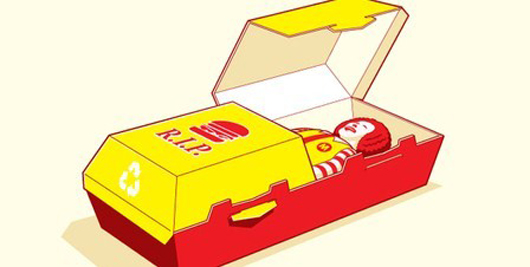
The Continuing Decline of McDonald’s


Long-time Corbett Reporteers might recall my 2015 video, “Celebrate! McDonald’s is Dying!” where I detailed the many, many woes the fast “food” giant was dealing with at the time, including:

Since then, McCancer’s has been undergoing a sweeping “restructuring” that has seen many layers of lipstick slapped on their factory-farmed pig. This restructuring includes not only cosmetic changes (“All-day breakfasts and new value menus for everyone!”) but behind-the-scenes efforts to trim $500 million from the company’s operating expenses, including buyouts and layoffs at company headquarters and the re-franchising of 4,000 corporate “restaurants.”

The global giant’s influential PR machine has used sleight-of-hand and other tricks to make this restructuring look like a smash success. They used their cheerleaders at the Wall Street Journal to hype “stronger-than-expected” profit and sales figures and their boosters at US News & World Report to hype some highly-selective earnings comparisons suggesting that this “turnaround” is, to use the WSJ’s phrase, “sustainable.”

But one doesn’t have to scratch too hard to reveal the rusty reality beneath this PR paint job.

McPinkslime’s might have “beat expectations” for sales and profits, but beating diminished expectations is hardly a sign of booming business. Just look at the nuts and bolts of the Q3 2016 earnings report: Year-on-year revenue is down 2.9% and net income is down 2.6%. And keep in mind, those numbers are in comparison to the already-terrible 2015 figures.

And that “re-franchising” operation? It cost $130 million in pre-tax charges.

But don’t worry, everyone, they “beat expectations!” Pay no attention to the hemorrhaging corporation behind the curtain!

And now the latest sign of McDonteat’s global retreat (via Corbett Report member “BuddhaForce”): “McDonald’s gives up control of its China business in $2 billion deal.”

The story is fascinating enough in its own right, what with McDonteats throwing in the corporate towel on the largest and fastest-growing consumer market in the world. But the devil is, as always, in the details. Who is purchasing the majority stake in the company’s mainland operations? None other than The Carlyle Group and CITIC Group.

The Carlyle Group’s name will likely ring a bell as one of the largest swamp pits “private equity firms” in the world, and one with its fingers in many a pie, including, of course, 9/11.

CITIC Group, meanwhile, will be familiar to The Corbett Report faithful as a key player in “China and the New World Order,” a Chinese state-owned investment company that helped serve as the Rockefeller-Kissinger nexus between the Deng Xiaoping-era “capitalist roaders” and their western finance oligarch recolonizers.

That these two cesspools are converging on the giant turd of American fast food is fitting enough. The McDonaldization of China is proceeding apace, and the usual crew are there to profit from it.

But as to what this story says about the continuing decline of the once-mighty golden arches, there are two main takeaways to the story, one depressing and one positive.

On the depressing front, there is a simple reason for the across-the-board slowdown in fast food sales in recent years (despite the predictable attempts to overcomplicate the problem in clickbait-y listicle format). For once, the Wall Street Journal gets it right: It’s the economy, stupid. What greater rebuke to the easily-disprovable economic “recovery” nonsense of the Obama years could be possible than pointing out the simple fact that people are too worried about their economic future to splurge on a $5 value meal?

But on a positive note, we can take McFatfood’s woes as a sign that, try as they might with their considerable propaganda resources, the corporate chieftains can’t put their egg McMuffin back together again. People are fed up with fast food. And although some, concerned with cost, are turning to eating at home as the cheaper option, others are more concerned with what’s in their food, where it’s sourced from, how it’s being prepared and who is being paid for it. Who wants instant, nutritionless, food-like substitute rolled up in plastic and slapped down on a tray by surly, overworked servers (or, increasingly, robots) anyway?

For those interested in how they can take part in the real food revolution that will render the McFastfood economy obsolete, may I humbly offer this podcast on guerrilla gardeningBon appétit!

FROM JAMES CORBETT 

Wednesday, 19 November 2025

The Mucusless Diet

An early example of a bad diet was the “mucusless diet,” formulated by a German “professor” Arnold Ehret and published in a 1922 book called Mucusless Diet Healing System: Scientific Method of Eating Your Way to Health. Unfortunately, we don’t know the long-term effects of the diet on its inventor because Ehret died after falling on a curb and hitting his head two weeks after writing the book.

According to Ehret, “Every disease, no matter what name it is known by Medical Science, is Constipation. A clogging up of the entire pipe system of the human body. Any special symptom is therefore merely an extraordinary local constipation by more accumulated mucus at this particular place. Special accumulation points are the tongue, the stomach and particularly the entire digestive tract.” He preached that fruit was the perfect food and along with leafy vegetables was enough to sustain a human being in good health. He also advocated fasting, starting with a two- or three-day fast, and promoted longer fasts (up to forty days) once the body was used to going without food.

Like many other practitioners in the early 20th century, Ehret was fixated on the bowels—his contemporary John Harvey Kellogg, for example, believed that three bowel movements per day were a sign of good health. “The average person has as much as ten pounds of un-eliminated feces in the bowels continually, poisoning the blood stream and the entire system,” wrote Ehret. “Think of it! My ‘Mucus Theory’ and ‘Mucusless Diet Healing System’ stand unshaken; it has proven the most successful ‘Compensation-Action’ so-called cure against every kind of disease. By its systematic application thousands of declared-incurable patients could be saved.”

Whereas conventional doctors of the time—also often fixated on the bowels–treated “clogged bowels” with arsenic preparations, Ehret advocated a strict vegan diet—which may have unclogged those stroppy bowels in the short term, but would starve you if you stuck to it, especially if you also engaged in punishing fasts.

Only fruit and leafy green vegetables were allowed. “All other foods of civilization, without exception, are mucus and acid forming, and therefore are harmful.” Apparently, Ehret’s “scientific” approach failed to realize that our mucous membranes are there for a purpose. . . to produce mucus.

Ehret railed against the “heavy breakfast,” calling it “the worst and by far the most unhealthy habit. No solid food should be eaten in the early morning at all if you desire to secure the best results.” He also warned against taking liquids with foods.  “If accustomed to tea or coffee, wait a short while after you have eaten before drinking. Soups should be avoided with meals, as the more liquid taken the more difficult for proper digestion. If a warm drink is desired, for instance, as a breakfast drink during the winter time, make a broth by cooking for a long time different kinds of vegetables, such as spinach, onions, carrots, cabbages, etc., and DRINK THE JUICE ONLY.”

Unfortunately, the mucusless diet did not die with its inventor, but took on a life of its own.  Reprinted in 1953, his book is still out there urging a starvation diet as a way to bodily purity.  The most famous recent advocate for the diet was Apple CEO Steve Jobs who, for the better part of his life, consumed only fruits and vegetables until his death from pancreatic cancer in 2011. 

When Ashton Kutcher, who played the character of Jobs in the eponymous film, tried to follow the mucusless diet, he lost eighteen pounds but he ended up in the emergency room as his insulin levels fluctuated out of control.


What could possibly go wrong on a diet of only fruits and vegetables? Malnutrition, low blood sugar, osteoporosis, dementia, anger and mood swings (Jobs was famous for this), to name but a few. The diet certainly will not prevent cancer, as proven by the example of the late Apple CEO. 

 https://nourishingtraditions.com/weird-diets/

Saturday, 15 November 2025

Some handy resources about "vaccinations"


Do you know what's in a vaccine? None of these should be injected into your body. (infographic)


Pediatrician Dr. Paul Thomas - The Vaxxed-Unvaxxed Data Presentation (pdf)


Dr. Paul Thomas Destroys The Conventional Vaccine Narrative (video)


The Truth About Vaccinations – History and Hoax


The Poisoned Needle: Suppressed Facts About Vaccination (1957 book - free to read online)

By Eleanore McBean 


Friday, 14 November 2025

Fluoridated Toothpaste – Toxic and bad for teeth too

 Most toothpastes contain fluoride, supposedly to prevent tooth decay. Sadly, the majority of consumers fall for this con and poison themselves even further by applying it to their teeth.


The fluoride in toothpaste is not an organic trace mineral found in the ground. It’s an industrial waste chemical that has been deceivingly and incorrectly called “fluoride”. It is inorganic, very toxic, and more poisonous than lead.

Any amount of fluoride in water exceeding 2 ppm (parts per million) would be considered unsafe. But fluoridated toothpastes have been found to contain levels of up to 7000 ppm. Even the U.S. FDA now regards fluoride in toothpaste as a potential toxic drug.

One of the most common symptoms of excess fluoride is “dental fluorosis”. You will see chalky white patches on the teeth making teeth “spotty”. Enamels can also become more porous with use of fluoridated toothpaste leading to discoloration of the teeth and pitting of the enamel.

Young children tend to apply lots toothpaste to their toothbrush, and then swallow plenty of it. (Swallowing half a tube of fluoride toothpaste in one go can be fatal)

Fluoride in the mouth is absorbed through our mucous lining and accumulates in our bodies just like fluoride that has been swallowed. The accumulated fluoride is carcinogenic and harmful to our metabolic systems. It leads to increased hip fractures, osteoporosis, arthritis and lowered brain function.

Another harmful ingredient in toothpaste is sodium lauryl sulfate (SLS) – a foam building substance known to be cancer causing.

And in addition, virtually all toothpastes contain glycerine. Glycerine coats the teeth, so that they can’t remineralise to heal tooth decay

The basic requirements for remineralising teeth are:

A nutrient dense, whole food, Weston A Price type diet, including:

Bone broths & marrow
  Cod liver oil
  Butter oil, or lots of good quality butter
  Good quality animal foods
  Fermented foods
Fluoride free water

 A fluoride free, glycerine free tooth cleaner

Monday, 10 November 2025

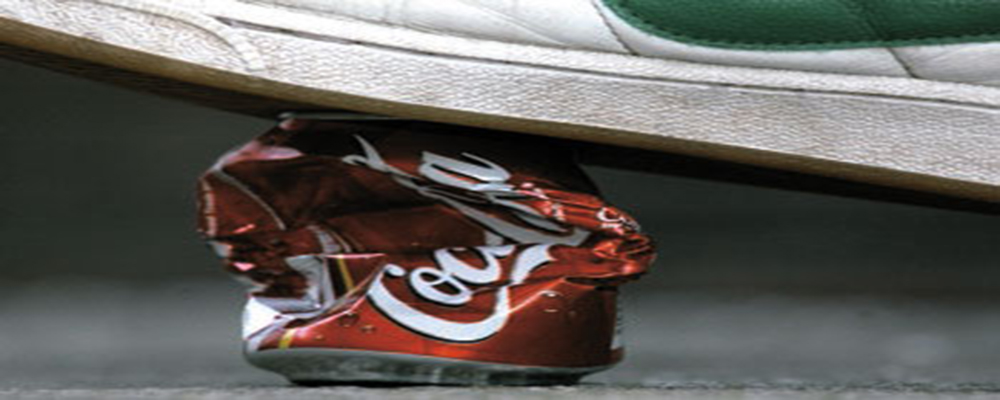
Coca-Cola - selling poison for over a century

Imagine pushing this poison for over a century and getting away with it…

It’s so common place that it goes unmentioned, and unchallenged. Its logo is in every shop and street, it sponsors TV programs, appears almost everywhere, and is readily valued and accepted by the unthinking masses. It’s “down with kids” who drink truckloads of the stuff and have it for breakfast. It even has thousands of devoted fans, and millions of addicted consumers.

The reason I’m singling it out for attention is that it deserves some. There has been surprisingly little negative reaction to a company that is systematically poisoning huge numbers of people globally. Coca-Cola drinking causes health problems on a scale similar to cigarette smoking, but is perceived as a harmless drink suitable for children.

Take out the water, and all it’s remaining ingredients are known toxins, but then even the tap water they use is toxic…. The two most dangerous toxins are sugar (implicated in almost all modern disease), and aspartame (a Monsanto manufactured carcinogenic toxin), and there’s plenty more dodgy stuff in every can.

Imagine inventing a drug that was dirt cheap to make, highly addictive, totally legal, and could be sold readily to children who become hooked for life. Like cigarettes but without the bad press. Imagine pushing it for over a century and getting away with it…

Sure, later on a high proportion of the consumers will become fat or unhealthy, diabetics or cancer victims. But there’s plenty more where they came from, and plenty more in new markets like China and South America.

Oh yes, and by the way, don’t go thinking that the other soft drinks are any better, Red Bull, “V”, Pepsi, and the rest are all toxic too. All the stuff they put in soft drinks is bad. Very bad… In New Zealand there is one soft drink manufacturer that isn’t trying to poison it’s customers – Phoenix Natural Foods. This is an ethical company who make real drinks including a cola that tastes so much better than the crud sold by Coca-Cola that you will never go back.

Enjoy Coca-Cola. Not.


Welcome to Coca Cola

The Coca-Cola Company exists to benefit and refresh everyone who is touched by our business. Founded in 1886, our Company is the world’s leading manufacturer, marketer, and distributor of nonalcoholic beverage concentrates and syrups, used to produce more than 230 beverage brands. Our corporate headquarters are in Atlanta, with local operations in nearly 200 countries around the world. www.cocacola.com


Reasons To Boycott Coca-Cola

Coca-Cola in the third world:Coca-Cola has been strongly criticized for their ruthless campaigns in the third world. In these countries, the company sets the price of their products just within reach of the poorest, and their products represent, through the huge commercial campaigns, symbols of a western lifestyle.

Cary Fowler, economist at the UN commission for checking transnational companies, has said: “Poor people in the third world can in the company’s advertisements see how Coca-Cola and Fanta is equalled to happy, well-off, often white middle-class families. The poor that want the best for their children consequently buy Coke or Fanta for their children, or even worse, they start buying it for their infants. Instead of breast milk, the children get Coca-Cola!”

In a hospital in Zambia, half of the patients in the child clinic received the diagnosis “Fanta baby” in the journals. The disease is caused by malnutrition, since the children were raised on Fanta. As a consequence, the Zambian government banned Coca-Cola from continuing their campaign, since they had a bad influence on the people. Another example of malnutrition because of Coca-Colas spendy campaigns can be seen in a study that the Food Department in Rio de Janeiro conducted in 1991. They then found that children between 6 and 14 years consumed very large quantities of Coke. These children showed all the signs of malnutrition in the shape of vitamin deficiency, and the children from the poorest families also suffered protein deficiency.

A Mexican priest wrote in 1974 that Mexican villagers were convinced that you’re supposed to drink carbonated drinks at least once a day, and this lead to the villagers consuming smaller amounts of fruits and vegetables, to drink more fizzy drinks. Some families even sold their crops to be able to afford Coca-Cola products.

Unhealthy: The Cola drinks are downright harmful to your health. A can of Coke contains up to 10% sugar, i.e. not quite 13 sugarcubes. This amount is about the same in all drinks from the Coca-Cola Company, with the exception of the “diet” drinks, of course. Since the sugar in the diet drinks are substituted with saccharine, they must in the US carry a health warning, since saccharine may cause cancer of the bladder. In a study of carbonated drinks conducted in 1991, however, it was discovered that many of the drinks that are not classified as diet products contain both saccharine and ordinary sugar.

Note that this article is not even mentioning the much bigger dangers of Aspartame – read the info on this link !!! – Aspartame

Multinational Coca-Cola: Coca-Cola is definitely world-wide. Their products are sold in more than 155 countries. In Brazil, for example, the company has control of no less than 55% of the soda market. Smaller companies can’t compete with companies of Coca-Cola’s size, since they don’t have a chance to put together campaigns and reach out to the consumers. Companies like Coca-Cola have in this manner, in many places, gained a total monopoly on the market and can put their prices just where they want. Additionally, we, as consumers, get less of a choice.

Oppression of workers: Coca-Cola are (in)famous for brutally and actively fighting unions on their factories, and in the countries in which they’re established. In Guatemala, the company leaders and the death squads in the country co-operated (can be read in a US union newspaper in 1980). The whole union leadership on the factory was on the death list, and in 1980 two were murdered. This lead to a world-wide boycott of Coca-Cola.

In America, Coca-Cola has also been accused of racial bias. In 1999, eight black former employees sued the company, accusing it of denying fair pay, promotion, raises and performance reviews to blacks. This lead to a “bus trip for justice”, between Atlanta, GA, and Wilmington, Del., in April 2000. On November 16,2000, Coca-Cola was sentenced to pay about $190.000.000 to about 2000 black workers.

Companies under Coca-Cola: Of course Coca-Cola has bought other large companies to increase their profit. And it’s not always easy to completely boycott them if you don’t know which their daughter companies are. These are at least some of them, always check on the bottle. – Fanta – Sprite – Fruitopia – MER – Sun Maid – Schweppes (in some countries).


 Coca-Cola – some interesting facts:


A class-action suit involving 2,000 current and former employees alleges that black employees at Coca-Cola were paid on average $27,000** a year less than white employees.

The average 12 ounce cola drink contains 9 teaspoons of sugar.

Coke’s board of directors has no Hispanic members, and only one black in 20 years, although Coke operates in 200 nations and is the largest employer in Africa.

The CEO paid himself 53 times the average worker, 1317 times the average worker with total stock compensation. ($1,354,167 and $33,593,552, respectively, the avg. American worker earned $25,501)

Recent restructuring resulted in 5,200 job cuts (18 per cent of the workforce), the largest in Coke’s history, and will cost Coke about $725,000,000 this year.

The layoff depressed Coke share prices while the company was still struggling to restore sales and image after a European contamination scare last summer.

A Survey of over 6000 Asians revealed that Coca-Cola is more than three times more recognizable than its nearest competitor.

In Nigeria, Coca-Cola co-sponsors events organized by the brutal General Abacha led military dictatorship which are used as a propaganda tool to endorse military rule.

Nigeria has been and is Coca-Cola’s largest market in Africa. Coca-Cola’s market share in Nigeria has risen from 11% in 1993, when the General Abacha led Nigerian military usurped power, to over 20% today. It is therefore easy to see that Coca-Cola has benefited immensely, and is still benefiting immensely from a regime that denies the majority of its own people freedom.

In 1990, Coca-Cola promised to make plastic soft drink bottles with 25% recycled plastic. Today, the company sells over 25 million plastic soda bottles in the U.S. every day — and Coke uses almost no recycled plastic.

If Coca-Cola were to buy 25 percent recycled content plastic bottles it would only cost about one-tenth of one cent per 20 ounce bottle (which costs Coke over 6 cents each).

The shift to virgin plastic packaging, and away from glass and aluminum, has resulted in a windfall profit of more than $150 million.
Meanwhile, the drop in virgin PET prices caused a drop in prices for reclaimed PET from 20 to only 4 cents per pound. So, while Coke reaped tens of millions, many plastic recyclers were driven out of business and community recycling programs suffered.

University of Georgia students protested the acceptance of a $1.5 million gift from Coca-Cola.

Students at New Delhi University in India protest both Coca-cola and Pepsi as symbols of America’s interests in India as just a market, and not as a sovereign nation being sanctioned for nuclear weapons tests.

Coca-cola uses aspartame (Nutrasweet, et al), a toxic substance which causes not only individual symptoms, but can mimic entire syndromes, such as CFIDS (chronic fatigue and immune deficiency syndrome). It can also cause grand mal seizures, decreased vision, pain in the eyes, decreased tears, ringing in the ears, hearing impairment, headache, dizziness and unsteadiness, confusion, memory loss, drowsiness, sleepiness, slurring of speech, numbness and tingling, tremors, depression, irritability, aggression, anxiety, insomnia, phobias, heart palpitations, shortness of breath, high blood pressure, nausea, diarrhea, abdominal pain, itching, hives, menstrual changes, weight gain, hair thinning and hair loss, urinary burning and frequency, excessive thirst, fluid retention, bloating, increased infection, and even death.

About 78% of all complaints to the Food and Drug Administration are about adverse reactions to aspartame (also called NutraSweet, Equal, Nutrisweet, etc.).

Coca-cola removed all ostensible Nutrasweet and Equal labels from their diet products’ cans, but are forced to include aspartame in the ingredients list.

The aspartame in Diet Coke can block the brain’s ability to determine a satisfied appetite; a Diet drink causes weight gain.

There is a sordid and unquestionably unethical history concerning the FDA acceptance of aspartame,

http://www.homestead.com/perc/files/companies/cocacola.html


I’m fairly sure the average New Zealander doesn’t drink as much as 56 US gallons (212 Litres) of soft drinks a year yet (must check on that…) – it’s an obscene amount, but the Coca Cola company is doing everything in their power to get the shit moving globally, and bring everyone else’s health standards down to that of Americans. Make sure that some other loser is drinking your share!


The Dangers of Soda Drinks

How many sodas have you had today? How about your kids? The average American drinks an estimated 56 gallons of soft drinks each year, but before you grab that next can of soda, consider this: one can of soda has about 10 teaspoons of sugar, 150 calories, 30 to 55 mg of caffeine, and is loaded with artificial food colors and sulphites.

This is an alarming amount of sugar, calories and harmful additives in a product that has absolutely no nutritional value. Plus, studies have linked soda to osteoporosis, obesity, tooth decay and heart disease. Despite this, soda accounts for more than one-quarter of all drinks consumed in the United States. Teenagers and children, who many soft drinks are marketed toward, are among the largest consumers.

In the past 10 years, soft drink consumption among children has almost doubled in the United States. Teenage boys now drink, on average, three or more cans of soda per day, and 10 percent drink seven or more cans a day. The average for teenage girls is more than two cans a day, and 10 percent drink more than five cans a day. While these numbers may sound high, they’re not surprising considering that most school hallways are lined with vending machines that sell, of course, soft drinks.

It’s not uncommon for schools to make marketing deals with leading soft drink companies such as Coca-Cola from which they receive commissions–based on a percentage of sales at each school–and sometimes a lump-sum payment. The revenues are used for various academic and after-school activities, but what activity could be worth devastating the students’ health, which is exactly what consuming all that soda is doing? Getting rid of vending machines in schools–or replacing their contents with pure water and healthy snacks–could make a big difference, as vending machines can increase the consumption of sweetened beverages by up to 50 or more cans of soda per student per year.

Let’s take a look at some of the major components of a can of soda:

Phosphoric Acid: May interfere with the body’s ability to use calcium, which can lead to osteoporosis or softening of the teeth and bones. Phosphoric acid also neutralizes the hydrochloric acid in your stomach, which can interfere with digestion, making it difficult to utilize nutrients.

Sugar: Soft drink manufacturers are the largest single user of refined sugar in the United States. It is a proven fact that sugar increases insulin levels, which can lead to high blood pressure, high cholesterol, heart disease, diabetes, weight gain, premature aging and many more negative side effects. Most sodas include over 100 percent of the RDA of sugar.

Aspartame: This chemical is used as a sugar substitute in diet soda. There are over 92 different health side effects associated with aspartame consumption including brain tumors, birth defects, diabetes, emotional disorders and epilispsy/seizures. Further, when aspartame is stored for long periods of time or kept in warm areas it changes to methanol, an alcohol that converts to formaldehyde and formic acid, which are known carcinogens.

Caffeine: Caffeinated drinks cause jitters, insomnia, high blood pressure, irregular heartbeat, elevated blood cholesterol levels, vitamin and mineral depletion, breast lumps, birth defects, and perhaps some forms of cancer.

Tap Water: I recommend that everyone avoid drinking tap water because it can carry any number of chemicals including chlorine, trihalomethanes, lead, cadmium, and various organic pollutants. Tap water is the main ingredient in bottled soft drinks.

Soda is one of the main reasons, nutritionally speaking, why many people suffer health problems. Aside from the negative effects of the soda itself, drinking a lot of soda is likely to leave you with little appetite for vegetables, protein and other food that your body needs. If you are still drinking soda, stopping the habit is an easy way to improve your health. Pure water is a much better choice. If you must drink a carbonated beverage, try sparkling mineral water.


Dr. Joseph Mercola with Rachael Droege


List of Coca-Cola products

(boycott all of this toxic crap)

Bacardi Brand Tropical Fruit Mixers
Bright and Early Breakfast beverages
Caffeine Free Coca-Cola
Caffeine Free Coca-Cola Classic
Caffeine Free Diet Coke
Caffeine Free TAB
Cherry Coke
Coca-Cola
Coca-Cola Classic
Coca-Cola Nestle Refreshments (CCNR) Teas and Coffees
Diet Cherry Coke
Diet Coke (a.k.a.) Coke Light
Diet Sprite
Fanta
Five-Alive
Fresca
Fruitopia
Georgia Brand Coffee
Hi-C
Mello Yello
Minute Maid
Mr. PiBB
OK Soda
PowerAde
Schweppes (in Nigeria)
Sprite
Surge
TAB


WATER OR COKE?

WATER

1. 75% of Americans are chronically dehydrated.

2. In 37% of Americans, the thirst mechanism is so weak that it is often
mistaken for hunger.

3. Even MILD dehydration will slow down one’s metabolism as much as 3%.

4. One glass of water will shut down midnight hunger pangs for almost 100%
of the dieters studied in a University of Washington study.

5. Lack of water, the #1 trigger of daytime fatigue.

6. Preliminary research indicates that 8-10 glasses of water a day could
significantly ease back joint pain for up to 80% of sufferers.

7. A mere 2% drop in body water can trigger fuzzy short-term memory,
trouble with basic math, and difficulty focusing on the computer screen or
on a printed page.

8. Drinking 5 glasses of water daily decreases the risk of colon cancer by
45%, plus it can slash the risk of breast cancer by 79%, and one is 50%
less likely to develop bladder cancer.


COKE:

1. In many states (in the USA) the highway patrol carries two gallons of
coke in the truck to remove blood from the highway after a car accident.

2. You can put a T-bone steak in a bowl of coke and it will be gone in two
days

3. To clean a toilet: Pour a can of Coca-Cola into the toilet bowl and let
the “real thing” sit for one hour, then flush clean. The citric acid in
Coke removes stains from vitreous China.

4. To remove rust spots from chrome car bumpers: Rub the bumper with a
rumpled-up piece of Reynolds Wrap aluminum foil dipped in Coca-Cola.

5. To clean corrosion from car battery terminals: Pour a can of Coca-Cola
over the terminals to bubble away the corrosion.

6. To loosen a rusted bolt: Applying a cloth soaked in Coca-Cola to the
rusted bolt for several minutes.

7. To remove grease from clothes: Empty a can of coke into a load of greasy
clothes, add detergent, and run through a regular cycle. The Coca-Cola will
help loosen grease stains.


For Your Info:

1. The active ingredient in Coke is phosphoric acid. Its pH is 2.8. It
will dissolve a nail in about 4 days. Phosphoric acid also leaches calcium
from bones and is a major contributor to the rising increase in
osteoporosis.

2. To carry Coca-Cola syrup (the concentrate) the commercial truck must use
the Hazardous material place cards reserved for Highly corrosive materials.


3. The distributors of coke have been using it to clean the engines of
their trucks for about 20 years…


Disclaimer

This website is not affiliated with the Coca-Cola Company. It is not endorsed or sponsored by the Coca-Cola Company. This website is hosted by FROT DESIGN. While every attempt is made to ensure that the information provided is correct, no warranty is made as to its accuracy, and no liability for its use, or misuse, will be accepted. All names and logos used herein this website are trademarks or registered trademarks of their respective owners and are used for identification purpose only. Coca-Cola is toxic arse juice, and the criminals who run the company should be arrested. Coke Adds Death.


Barbie doll pictured with exclusive Coke Sphincter Insertion Rod, Copyright Coca-Cola Company.