This year we are continuing our weekly posts of 10 WAPF related random
images. We saved all the WAPF related images that we re-posted or simply
noticed online last year in a big image gallery: WAPF IMAGES 2025 -
There are all sorts of images in there so hopefully you will find
something of interest.
The 2025 Gallery got up to around 500
images, and in 2026 we plan to have lots more fun posting images, so our
new WAPF IMAGES 2026 gallery could end up having even more images than that by
the end of the year!
Click on any of these images to see it full sized.
This year we are continuing our weekly posts of 10 WAPF related random
images. We saved all the WAPF related images that we re-posted or simply
noticed online last year in a big image gallery: WAPF IMAGES 2025 -
There are all sorts of images in there so hopefully you will find
something of interest.
The 2025 Gallery got up to around 500
images, and in 2026 we plan to have lots more fun posting images, so our
new WAPF IMAGES 2026 gallery could end up having even more images than that by
the end of the year!
Click on any of these images to see it full sized.
When the fabricated food folks and apologists for the corporate farm
realized that they couldn’t block America’s growing interest in diet and
nutrition, a movement that would ultimately put an end to America’s
biggest and most monopolistic industries, they infiltrated the movement
and put a few sinister twists on information going out to the public.
Item number one in the disinformation campaign was the assertion that
naturally saturated fats from animal sources are the root cause of the
current heart disease and cancer plague.
Butter bore the brunt of the
attack, and was accused of terrible crimes. The Diet Dictocrats told us
that it was better to switch to polyunsaturated margarine and most
Americans did. Butter all but disappeared from our tables, shunned as a
miscreant.
This would come as a surprise to many people around the globe who
have valued butter for its life-sustaining properties for millennia.
When Dr. Weston Price studied native diets in the 1930’s he found that
butter was a staple in the diets of many supremely healthy peoples. 1
Isolated Swiss villagers placed a bowl of butter on their church
altars, set a wick in it, and let it burn throughout the year as a sign
of divinity in the butter. Arab groups also put a high value on butter,
especially deep yellow-orange butter from livestock feeding on green
grass in the spring and fall. American folk wisdom recognized that
children raised on butter were robust and sturdy; but that children
given skim milk during their growing years were pale and thin, with
“pinched” faces.2
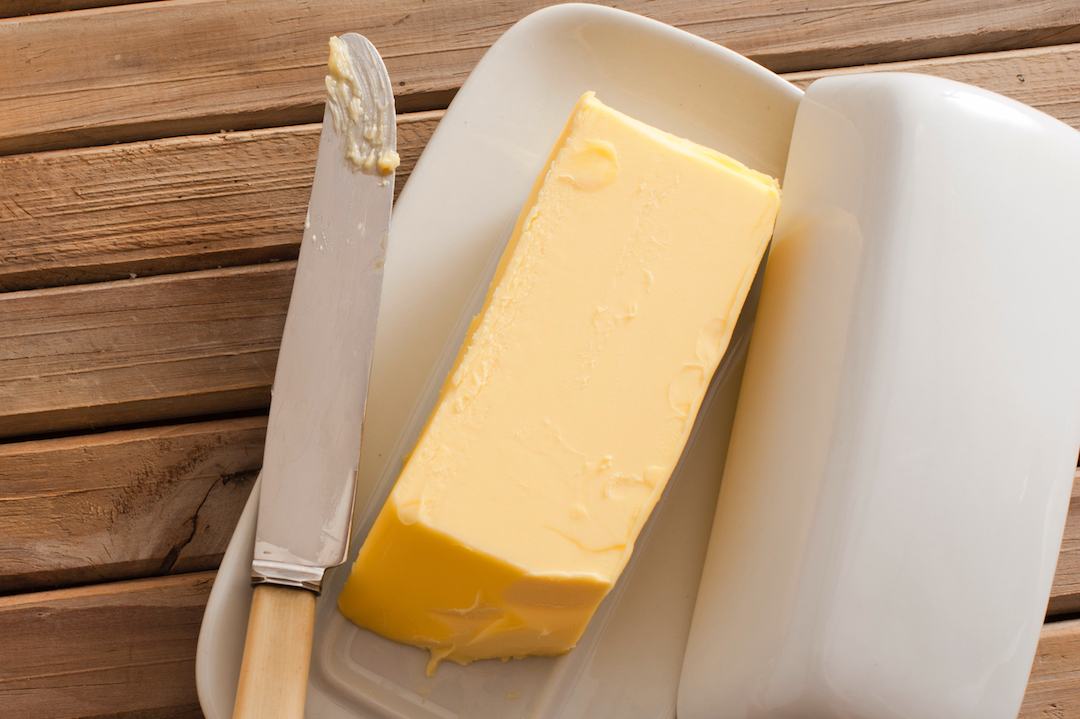
Does butter cause disease? On the contrary, butter protects us against many diseases.
Butter and Heart Disease
Heart disease was rare in America at the turn of the century. Between
1920 and 1960, the incidence of heart disease rose precipitously to
become America’s number one killer.
During the same period butter
consumption plummeted from eighteen pounds per person per year to four.
It doesn’t take a Ph.D. in statistics to conclude that butter is not a
cause.
Actually butter contains many nutrients that protect us from
heart disease. First among these is vitamin A which is needed for the
health of the thyroid and adrenal glands, both of which play a role in
maintaining the proper functioning of the heart and cardiovascular
system. Abnormalities of the heart and larger blood vessels occur in
babies born to vitamin A deficient mothers. Butter is America’s best and
most easily absorbed source of vitamin A.
Butter contains lecithin, a substance that assists in the proper
assimilation and metabolism of cholesterol and other fat constituents.
Butter also contains a number of anti-oxidants that protect against
the kind of free radical damage that weakens the arteries. Vitamin A and
vitamin E found in butter both play a strong anti-oxidant role. Butter
is a very rich source of selenium, a vital anti-oxidant–containing more
per gram than herring or wheat germ.
Butter is also a good dietary source cholesterol. What?? Cholesterol
an anti-oxidant?? Yes indeed, cholesterol is a potent anti-oxidant that
is flooded into the blood when we take in too many harmful
free-radicals–usually from damaged and rancid fats in margarine and
highly processed vegetable oils.3
A Medical Research Council
survey showed that men eating butter ran half the risk of developing
heart disease as those using margarine.4
Butter and Cancer
In the 1940’s research indicated that increased fat intake caused cancer.5
The abandonment of butter accelerated; margarine – formerly a poor man’s
food, was accepted by the well-to-do. But there was a small problem with
the way this research was presented to the public. The popular press
neglected to stress that fact that the “saturated” fats used in these
experiments were not naturally saturated fats but partially hydrogenated
or hardened fats–the kind found mostly in margarine but not in butter.
Researchers stated – they may have even believed it – that there was no
difference between naturally saturated fats in butter and artificially
hardened fats in margarine and shortening. So butter was tarred with the
black brush of the fabricated fats, and in such a way that the villains
got passed off as heroes.
Actually many of the saturated fats in butter have strong anti-cancer
properties. Butter is rich in short and medium chain fatty acid chains
that have strong anti-tumor effects.6
Butter also contains conjugated linoleic acid which gives excellent protection against cancer.7
Vitamin A and the anti-oxidants in butter–vitamin E, selenium and cholesterol–protect against cancer as well as heart disease.
Butter and the Immune System
Vitamin A found in butter is essential to a healthy immune system;
short and medium chain fatty acids also have immune system strengthening
properties. But hydrogenated fats and an excess of long chain fatty
acids found in polyunsaturated oils and many butter substitutes both
have a deleterious effect on the immune system.8
Butter and Arthritis
The Wulzen or “anti-stiffness” factor is a nutrient unique to butter.
Dutch researcher Wulzen found that it protects against calcification of
the joints–degenerative arthritis–as well as hardening of the arteries,
cataracts and calcification of the pineal gland.9
Unfortunately this vital substance is destroyed during pasteurization.
Calves fed pasteurized milk or skim milk develop joint stiffness and do
not thrive. Their symptoms are reversed when raw butterfat is added to
the diet.
Butter and Osteoporosis
Vitamins A and D in butter are essential to the proper absorption of
calcium and hence necessary for strong bones and teeth. The plague of
osteoporosis in milk-drinking western nations may be due to the fact
that most people choose skim milk over whole, thinking it is good for
them. Butter also has anti-cariogenic effects, that is, it protects
against tooth decay.10
Butter and the Thyroid Gland
Butter is a good source of iodine, in highly absorbable form. Butter
consumption prevents goiter in mountainous areas where seafood is not
available. In addition, vitamin A in butter is essential for proper
functioning of the thyroid gland.11
Butter and Gastrointestinal Health
Butterfat contains glycospingolipids, a special category of fatty
acids that protect against gastro-intestinal infection, especially in
the very young and the elderly. For this reason, children who drink skim
milk have diarrhea at rates three to five times greater than children
who drink whole milk.12
Cholesterol in butterfat promotes health of the intestinal wall and protects against cancer of the colon.13
Short and medium chain fatty acids protect against pathogens and have strong anti-fungal effects.14
Butter thus has an important role to play in the treatment of candida overgrowth.
Butter and Weight Gain
The notion that butter causes weight gain is a sad misconception. The
short and medium chain fatty acids in butter are not stored in the
adipose tissue, but are used for quick energy. Fat tissue in humans is
composed mainly of longer chain fatty acids.15
These come
from olive oil and polyunsaturated oils as well as from refined
carbohydrates. Because butter is rich in nutrients, it confers a feeling
of satisfaction when consumed. Can it be that consumption of margarine
and other butter substitutes results in cravings and bingeing because
these highly fabricated products don’t give the body what it needs?.
Butter for Growth and Development
Many factors in butter ensure optimal growth of children. Chief among
them is vitamin A. Individuals who have been deprived of sufficient
vitamin A during gestation tend to have narrow faces and skeletal
structure, small palates and crowded teeth.16
Extreme vitamin A deprivation results in blindness, skeletal problems and other birth defects.17
Individuals receiving optimal vitamin A from the time of conception
have broad handsome faces, strong straight teeth, and excellent bone
structure. Vitamin A also plays an important role in the development of
the sex characteristics. Calves fed butter substitutes sicken and die
before reaching maturity.18
Cholesterol found in butterfat plays an important role in the development of the brain and nervous system.20
Mother’s milk is high in cholesterol and contains over 50 percent of
its calories as butterfat. Low fat diets have been linked to failure to
thrive in children21
Yet low-fat diets are often recommended
for youngsters! Children need the many factors in butter and other
animal fats for optimal development.
Beyond Margarine
It’s no longer a secret that the margarine Americans have been
spreading on their toast, and the hydrogenated fats they eat in
commercial baked goods like cookies and crackers, is the chief culprit
in our current plague of cancer and heart disease.22
But mainline nutrition writers continue to denigrate butter–recommending new fangled tub spreads instead.23
These may not contain hydrogenated fats but they are composed of highly
processed rancid vegetable oils, soy protein isolate and a host of
additives. A glitzy cookbook called Butter Busters promotes
butter buds, made from maltodextrin, a carbohydrate derived from corn,
along with dozens of other highly processed so-called low-fat commercial
products.
Who benefits from the propaganda blitz against butter? The list is a
long one and includes orthodox medicine, hospitals, the drug companies
and food processors. But the chief beneficiary is the large corporate
farm and the cartels that buy their products–chiefly cotton, corn and
soy–America’s three main crops, which are usually grown as monocultures
on large farms, requiring extensive use of artificial fertilizers and
pesticides.
All three–soy, cotton and corn–can be used to make both
margarine and the new designer spreads. In order to make these products
acceptable to the up-scale consumer, food processors and agribusiness
see to it that they are promoted as health foods. We are fools to
believe them.
Butter and the Family Farm
A nation that consumes butterfat, on the other hand, is a nation that
sustains the family farm. If Americans were willing to pay a good price
for high quality butter and cream, from cows raised on natural
pasturage–every owner of a small- or medium-sized farm could derive
financial benefits from owning a few Jersey or Guernsey cows.
In order
to give them green pasture, he would naturally need to rotate crops,
leaving different sections of his farm for his cows to graze and at the
same time giving the earth the benefit of a period of fallow–not to
mention the benefit of high quality manure. Fields tended in this way
produce very high quality vegetables and grains in subsequent seasons,
without the addition of nitrogen fertilizers and with minimal use of
pesticides.
Chickens running around his barnyard, and feeding off bugs
that gather under cowpaddies, would produce eggs with superb nutritional
qualities–absolutely bursting with vitamin A and highly beneficial
fatty acids.
If you wish to reestablish America as a nation of prosperous farmers
in the best Jeffersonian tradition, buy organic butter, cream, whole
milk, whole yoghurt, and barn-free eggs. These bring good and fair
profits to the yeoman producer without concentrating power in the hands
of conglomerates.
Ethnic groups that do not use butter obtain the same nutrients from
things like insects, organ meats, fish eggs and the fat of marine
animals, food items most of us find repulsive. For Americans–who do not
eat bugs or blubber–butter is not just better, it is essential.
This article was originally published by the Weston A Price Foundation - - By Sally Fallon and Mary G. Enig
Price, Weston, DDS Nutrition and Physical Degeneration, 1945, Price Pottenger Nutrition Foundation, Inc., La Mesa, California
Representative of American folk traditions about butterfat is this
passage from “Neighbor Rosicky”, by American author Willa Cather: [The
Rosickys] had been at one accord not to hurry through life, not to be
always skimping and saving. They saw their neighbours buy more land and
feed more stock than they did, without discontent. Once when the
creamery agent came to the Rosickys to persuade them to sell him their
cream, he told them how much the Fasslers, their nearest neighbours, had
made on their cream last year. “Yes,” said Mary, “and look at them
Fassler children! Pale, pinched little things, they look like skimmed
milk. I’d rather put some colour into my children’s faces than put money
into the bank.”
Cranton, EM, MD and JP Frackelton, MD, Journal of Holistic Medicine, Spring/Summer 1984
Nutrition Week Mar 22, 1991 21:12:2-3
Enig, Mary G, PhD, Nutrition Quarterly, 1993 Vol 17, No 4
Cohen, L A et al, J Natl Cancer Inst 1986 77:43
Belury, MA Nutrition Reviews, April 1995 53:(4) 83-89
Cohen, op cit
American Journal of Physical Medicine, 1941, 133; Physiological Zoology, 1935 8:457
Kabara, J J, The Pharmacological Effects of Lipids, J J Kabara, ed, The American Oil Chemists Society, Champaign, IL 1978 pp 1-14
Jennings, IW Vitamins in Endocrine Metabolism, Charles C. Thomas Publisher, Springfield, Ill, pp 41-57
Koopman, JS, et al American Journal of Public Health 1984 74(12):1371-1373
Addis, Paul, Food and Nutrition News, March/April 1990 62:2:7-10
Prasad, KN, Life Science, 1980, 27:1351-8; Gershon, Herman and Larry Shanks, Symposium on the Pharmacological Effect of Lipids, Jon J Kabara Ed, American Oil Chemists Society, Champaign, Illinois 1978 51-62
Levels of linoleic acid in adipose tissues reflect the amount of linoleic acid in the diet. Valero, et al Annals of Nutritional Metabolism, Nov/Dec 1990 34:6:323-327; Felton, CV et al, Lancet 1994 344:1195-96
Price, op cit
Jennings, op cit
DeCava, Judith Journal of the National Academy of Research Biochemists, September 1988 1053-1059
Price, op cit
Alfin-Slater, R B and L Aftergood, “Lipids”, Modern Nutrition in Health and Disease, Chapter 5, 6th ed, R S Goodhart and M E Shils, eds, Lea and Febiger, Philadelphia 1980, p 131
Smith, MM, MNS RD and F Lifshitz, MD Pediatrics, Mar 1994 93:3:438-443
This year we are continuing our weekly posts of 10 WAPF related random
images. We saved all the WAPF related images that we re-posted or simply
noticed online last year in a big image gallery: WAPF IMAGES 2025 -
There are all sorts of images in there so hopefully you will find
something of interest.
The 2025 Gallery got up to around 500
images, and in 2026 we plan to have lots more fun posting images, so our
new WAPF IMAGES 2026 gallery could end up having even more images than that by
the end of the year!
Click on any of these images to see it full sized.
Yes, I know that this sounds moronic, but let me explain.
First off – there are a lot of different approaches to Carnivore.Joachim Bartoll’s approachis possibly the most extreme, which includes raw meat. At the other end you have people like Paul Saladino whose Carnivore cookbook includes recipes with fruit and vegetables (WTF?). The approach that makes most sense to me is somewhere betweenBart KayandJudy Cho. Bart says doing it right means:
80% of the diet should be ruminant meat and the associated fat
Salt to your taste (and this may change over time)
Water as required
Some eggs, if you feel so inclined and you tolerate them
Some dairy, if you feel so inclined and you tolerate it
A tiny bit of organ meat, if you fancy it, but don’t overdo it and it’s not necessary
Some people do what they call BBBE, which is beef, bacon, butter & eggs.
Judy recommends a no plant elimination diet for healing. For long term Carnivore, she says to eat the Carnivore rainbow to get a range of nutrients – red meat, poultry, fish, bacon, seafood, dairy, eggs, animal fats – and I think a lot of people would find this easier. Always remembering though that the red meat should be the bulk of the diet.
Anyway, this post is not about how to do the Carnivore diet – do your own reading up on that, and I might write more later.
The post is about bread alternatives, which might help make the diet easier to stick to. They are usually based on eggs and either dairy of some kind or panko made from pork rinds. There is even one made from chicken. So as long as you don’t eat too much, they will fit in with most approaches.
She offers another alternative with 1 cup goat milk powder, 1/2 cup collagen and some extra baking soda.
One of the commenters on the video said:I made this with 3 eggs, 180g whole milk powder & 1 tbsp baking powder, I couldn’t find cream powder here in Scotland. I baked them in a conventional oven at 180 degrees Celsius for 12 mins without flipping them. I got 4 decent sized buns that smell like pancakes & taste like brioche. These are amazing for burgers or in my case, bacon & egg butties.
Other commenters have had success with A2 milk powder, or with buttermilk powder.
Cloud Bread
There are recipes for Cloud bread everywhere, and they are all very similar. This is just one I picked at random.
This year we are continuing our weekly posts of 10 WAPF related random
images. We saved all the WAPF related images that we re-posted or simply
noticed online last year in a big image gallery: WAPF IMAGES 2025 -
There are all sorts of images in there so hopefully you will find
something of interest.
The 2025 Gallery got up to around 500
images, and in 2026 we plan to have lots more fun posting images, so our
new WAPF IMAGES 2026 gallery could end up having even more images than that by
the end of the year!
Click on any of these images to see it full sized.
An early example of an unbelievably bad diet was the “mucusless diet,” formulated by a
German “professor” Arnold Ehret and published in a 1922 book called Mucusless Diet Healing System: Scientific Method of Eating Your Way to Health. Unfortunately,
we don’t know the long-term effects of the diet on its inventor because
Ehret died after falling on a curb and hitting his head two weeks after
writing the book.
According to Ehret, “Every disease, no matter what name it is known
by Medical Science, is Constipation. A clogging up of the entire pipe
system of the human body. Any special symptom is therefore merely an
extraordinary local constipation by more accumulated mucus at this
particular place. Special accumulation points are the tongue, the
stomach and particularly the entire digestive tract.” He preached that
fruit was the perfect food and along with leafy vegetables was enough to
sustain a human being in good health. He also advocated fasting,
starting with a two- or three-day fast, and promoted longer fasts (up to
forty days) once the body was used to going without food.
Like many other practitioners in the early 20th century,
Ehret was fixated on the bowels—his contemporary John Harvey Kellogg,
for example, believed that three bowel movements per day were a sign of
good health. “The average person has as much as ten pounds of
un-eliminated feces in the bowels continually, poisoning the blood
stream and the entire system,” wrote Ehret. “Think of it! My ‘Mucus
Theory’ and ‘Mucusless Diet Healing System’ stand unshaken; it has
proven the most successful ‘Compensation-Action’ so-called cure against
every kind of disease. By its systematic application thousands of
declared-incurable patients could be saved.”
Whereas conventional doctors of the time—also often fixated on the
bowels–treated “clogged bowels” with arsenic preparations, Ehret
advocated a strict vegan diet—which may have unclogged those stroppy
bowels in the short term, but would starve you if you stuck to it,
especially if you also engaged in punishing fasts.
Only fruit and leafy green vegetables were allowed. “All other foods
of civilization, without exception, are mucus and acid forming, and
therefore are harmful.” Apparently, Ehret’s “scientific” approach failed
to realize that our mucous membranes are there for a purpose. . . to
produce mucus.
Ehret railed against the “heavy breakfast,” calling it “the worst and
by far the most unhealthy habit. No solid food should be eaten in the
early morning at all if you desire to secure the best results.” He also
warned against taking liquids with foods. “If accustomed to tea or
coffee, wait a short while after you have eaten before drinking. Soups
should be avoided with meals, as the more liquid taken the more
difficult for proper digestion. If a warm drink is desired, for
instance, as a breakfast drink during the winter time, make a broth by
cooking for a long time different kinds of vegetables, such as spinach,
onions, carrots, cabbages, etc., and DRINK THE JUICE ONLY.”
Unfortunately, the mucusless diet did not die with its inventor, but
took on a life of its own. Reprinted in 1953, his book is still out
there urging a starvation diet as a way to bodily purity. The most
famous recent advocate for the diet was Apple CEO Steve Jobs who, for
the better part of his life, consumed only fruits and vegetables until
his death from pancreatic cancer in 2011.
When Ashton Kutcher, who
played the character of Jobs in the eponymous film, tried to follow the
mucusless diet, he lost eighteen pounds but he ended up in the emergency
room as his insulin levels fluctuated out of control.
What could possibly go wrong on a diet of only fruits and vegetables?
Malnutrition, low blood sugar, osteoporosis, dementia, anger and mood
swings (Jobs was famous for this), to name but a few. The diet certainly
will not prevent cancer, as proven by the example of the late Apple
CEO.